

Juvenile Delinquency
The juvenile delinquency system can be harsh. A skilled attorney is necessary to give your child the best chance of emerging with a clean slate and as little interruption as possible to his or her development.
The human brain is not fully mature until at least age 25. Kids make stupid mistakes, sometimes very serious mistakes.
NOTE: While the same laws apply throughout the state, practices in juvenile cases vary from county to county. The below information is based on common practices in Ventura County.
We understand the complexities of juvenile law at Freedom Law 805 and will fight for your child’s freedom and future if they are facing charges. If your child was arrested or cited for an offense, give us a call for a free consultation.
Juvenile Delinquency Process: Arrest to filing
When police determine a child has committed an offense, they will either arrest him or her and take the child to the juvenile facility or release the child with a citation. Children under age 12 can only be arrested and prosecuted for murder and forcible sex crimes. Normally, crimes committed when a child is under age 12 must be handled informally without court involvement.
Hiring an attorney before your child’s case is filed is a good idea, particularly for serious cases. The attorney can provide the DA with context and background that may make a critical difference on what charges the DA files, or if the DA files the case at all. Also, if your child is in custody, hiring an attorney immediately allows time to prepare for the detention hearing, which can happen as soon as the next day. If the offense occurred at school, at a school event, or even with school friends, you may also want to consult with an education attorney to potentially prevent your child’s expulsion.
My Child was Arrested
If your child was arrested in Ventura County, he or she will go to the juvenile facility on Vineyard Avenue in Oxnard. There, probation will determine if your child should remain in custody, be released on electronic monitoring, or simply be released to you. If your child remains at the juvenile facility or on electronic monitoring, the DA has only 48 hours (excluding holidays and weekends) to decide whether or not to file the case. If they file, your child must appear in court the next court day.
My Child Received a Citation
If police release your child with a citation, the case will typically be forwarded to the probation department to determine how it should be handled. Sometimes the police department will handle the matter informally through a diversion program they have developed for juveniles. If they forward the case to probation, the probation department will determine if the case can be informally handled through community service or other sanctions, or if they need to forward the case to the DA.
What to expect at the first juvenile court appearance
The first appearance in your child’s case is called the arraignment. At arraignment, the court will formally notify you and your child of the charges filed. A detention hearing will also occur if your child is in custody. Your child, his or her attorney, and normally the parent will discuss the best options for the case and make a decision as to whether the case should be continued, referred for a screening, or set for contest. Attorneys for juveniles have strict confidentiality duties and cannot speak with parents about their child’s case without the child’s permission.
Detention Hearing
If your child is in custody or on electronic monitoring, they will have a detention hearing. Rarely, the probation department will recommend detention when your child is not in custody. In this situation, probation has to have prepared a detention report. Otherwise, the judge cannot detain your child (meaning take him or her into the juvenile facility or place him or her on electronic monitoring).
To prepare for the detention hearing, you should gather documentation of positive activities your child is involved in and his or her accomplishments like good grades, sports, faith-based programs, clubs, or community service. Also bring evidence of why detention will harm your child, for example, records showing that they have fragile mental or physical health. Advise your child’s attorney of all of these issues and provide the documentation as early as possible. If the judge denies your child’s request for release, your child’s attorney can request a Dennis H. hearing, particularly if the evidence in the case is weak. Your child can also request release again later based on changed circumstances.
Screening, Continuance, or Set for Contest
At your child’s first court appearance, if the case is a misdemeanor, it is most common to refer the case to probation to screen for potential diversion programs, discussed in the next section. If your child’s attorney refers the case to probation for a screening, your child will get a new court date one month away if they are out of custody and two weeks away if they are detained. Before the next court date, probation will interview you and your child separately to determine what level of case handling is most appropriate. It is best for your child’s attorney to be present when probation interviews your child.
Sometimes it makes sense to continue the case at the first court appearance. If it is a serious case, for example, your child’s attorney may ask you to gather character letters and other information. Other times, setting the case for contest (trial) right away is the best strategy. Unfortunately, your child will not have the right to a jury trial, only a court trial where one judge decides innocence or guilt. On rare occasions, it makes sense for your child to admit the charges on the first court date, typically where police reports contain evidence of more serious crimes than those the DA has charged.
Potential Juvenile Case Dispositions
Juvenile court is both harsher and more forgiving than adult court. Children can be locked up for minor conduct like using marijuana while on probation, but they also can receive a “sentence” of only 5 or 7 years for murder. The technical term for a “sentence” in juvenile court is a “disposition.” Below are the levels of case handling and dispositions available in juvenile court, from least to most serious.654 Pre-Filing Informal Handling
For many low-level misdemeanor offenses, the probation department may resolve a case informally without involving the juvenile court. Police departments and district attorney's offices also sometimes offer similar informal diversion programs.
Program requirements commonly include community service, writing an essay, participating in educational programs, or engaging in restorative discussions with the alleged victim.
If your child successfully completes the program, the matter ends with a clean record and no further court consequences, provided all program requirements are satisfied.
654.2 Informal Probation
654.2 Informal Probation is available for most first-time juvenile offenses. Although the court has discretion to grant this program more than once, it is typically reserved for a child's first case unless later offenses are very minor.
Informal probation generally lasts six months and may be extended up to one year if additional time is needed to complete program requirements.
Typical conditions include:
- Community service
- Anger management or substance abuse classes
- Educational programs related to the offense
- Restitution when appropriate
California law generally prohibits search conditions during 654.2 probation. However, in Ventura County and some other counties, courts may approve a voluntary waiver of that protection when necessary to grant the program.
If your child successfully completes 654.2 probation, the case is dismissed and sealed under Welfare & Institutions Code section 786(a), without any admission of guilt.
Although less common, 654.2 probation may even be granted for certain serious felony cases when supported by strong advocacy and mitigating circumstances.
725 Probation Without Wardship
725 probation is often considered a child's final opportunity to avoid becoming a ward of the juvenile court. It is commonly granted when a child has violated 654.2 probation or when the offense is somewhat more serious but still appropriate for lower-level supervision.
The program is similar to 654.2 probation, but there are several important differences:
- Your child must admit guilt.
- Full restitution may be ordered.
- Search conditions may be imposed.
- The probation period cannot exceed six months.
If your child violates 725 probation, the court may declare the child a ward because the admission of guilt has already been entered.
If probation is completed successfully, the case is generally dismissed and sealed under Welfare & Institutions Code section 786(a), unless the offense is one listed in section 707(b).
790 Deferred Entry of Judgment (DEJ)
Deferred Entry of Judgment (DEJ) is available only for qualifying felony offenses that are not listed in Welfare & Institutions Code section 707(b).
DEJ involves intensive supervision, including:
- Frequent probation meetings
- Home searches
- Drug testing
- Community service
- Educational and counseling programs
Your child cannot be ordered to serve custody time as a condition of participating in DEJ. If they are in custody while the court considers DEJ, they are generally released once DEJ is granted.
Although DEJ can last up to three years, probation frequently recommends successful termination after approximately eighteen months when all requirements have been completed.
Successful completion results in dismissal and sealing of the case.
602 Wardship Probation
If the court sustains the petition and declines to grant 725 probation or DEJ, your child will generally become a ward of the juvenile court.
Wardship gives the court authority to remove your child from your custody, commit them to juvenile hall, or even place them in foster care when appropriate.
Many parents are alarmed when the court recites findings stating that:
- The parents failed to provide proper care or supervision.
- The child failed to reform.
- The child's welfare requires court intervention.
In most cases, however, children remain at home after serving any ordered juvenile commitment and continue probation while living with their family.
Wardship probation may continue until age 21, 23, or 25, depending on the offense. Conditions are intensive and often mirror those imposed under DEJ.
For offenses not listed in section 707(b), successful completion generally results in automatic dismissal and sealing under Welfare & Institutions Code section 786(a).
Secure Youth Treatment Facility (SYTF)
SYTF is the most serious disposition available in California juvenile court and is reserved for offenses listed in Welfare & Institutions Code section 707(b).
It replaced the former Division of Juvenile Justice (DJJ) system and allows commitments ranging from approximately two to seven years depending on the offense.
Every youth committed to SYTF receives an Individual Rehabilitation Plan (IRP), which outlines treatment goals, educational opportunities, counseling, and rehabilitation services. Defense attorneys may advocate for additional services tailored to the child's needs.
Review hearings occur every six months. Youth may earn reductions in their commitment through positive behavior and may eventually transition into less restrictive programs, community-based treatment, or outpatient supervision.
The juvenile court generally retains jurisdiction until age 23, or age 25 for the most serious offenses.
After completing both the baseline commitment and probation requirements, eligible youth may petition to have their juvenile record sealed under Welfare & Institutions Code section 781.
Transfer Hearings
Per section 707(a) of the Welfare and Institutions Code, the DA can choose to prosecute children as adults if the child allegedly committed an offense when he or she was age 16 or 17. A transfer hearing is the most involved juvenile proceeding and can take months and even years to complete. Both the DA and the defense will hire experts, likely multiple experts for the defense. The government has to prove beyond a reasonable doubt that the youth is not “amenable” to rehabilitation, or likely to be rehabilitated while under the juvenile court’s jurisdiction. While this sounds like a high bar, juvenile courts transfer cases frequently, even where evidence shows that the youth is already rehabilitating. If the court grants the transfer motion, your child will be tried as an adult and sentenced as an adult if convicted. If the court denies transfer, your child’s case will proceed in the juvenile court.
NEVER HIRE AN UNQUALIFIED ATTORNEY TO HANDLE A TRANSFER HEARING
It is critical to hire an attorney with extensive juvenile law experience if your child is facing a transfer hearing. If the DA is seeking to transfer your child to the adult court, your child is typically facing life in prison. Few private attorneys in Ventura County are equipped and qualified to litigate a transfer hearing. Your child should stick with an experienced public defender or hire a highly experienced private juvenile attorney if transfer is on the line. The worst thing you can do for your child is to hire the cheapest private attorney who will accept the case. Stay with the public defender if you cannot afford a highly skilled and experienced private juvenile attorney.


Her skills in depositions, trial work, and cross-examination are outstanding and she knows exactly how to elicit the right testimony. She fought for me during an especially difficult situation, where my ex was involved with his attorney — something that complicated the dynamics significantly.
Her balanced approach between litigation and settlement is rare and invaluable. Since my case was transferred to her, not only did I feel more protected legally, but my mental health significantly improved as well.
If you are looking for someone who will truly stand by you, advocate for truth, and handle even the most complex situations with skill and compassion, I can’t recommend Hali enough.


Juvenile Delinquency Resources
Your child’s rights in custody at the juvenile detention center.
Submit complaints about your child’s treatment in custody.
California Youth Defender Center:
Additional helpful resources
We understand the complexities of juvenile law at Freedom Law 805 and will fight for your child’s freedom and future if they are facing charges. If your child was arrested or cited for an offense, give us a call for a free consultation.
PROUDLY SERVING
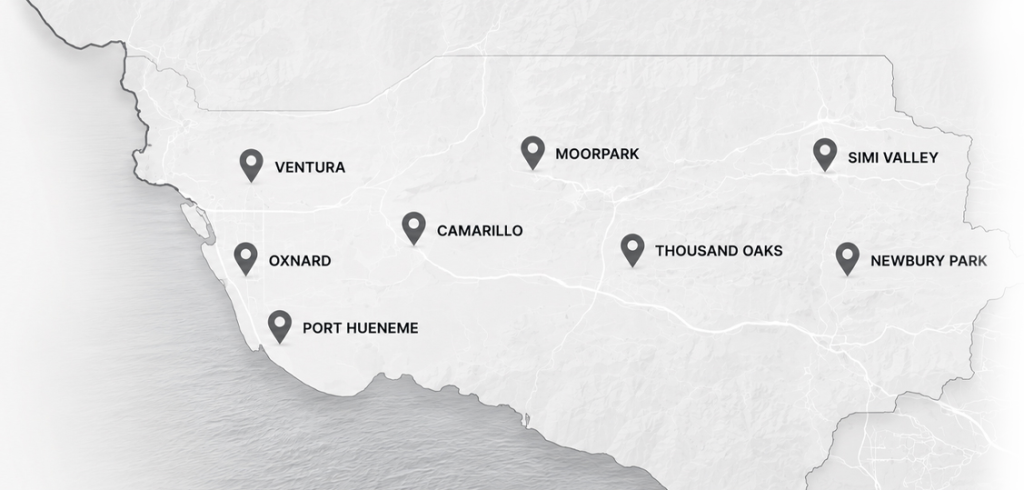
Ventura County
We proudly represent clients in every city and community across Ventura County.
About Juvenile Delinquency Cases in Ventura County
Juvenile cases in California are governed by the Welfare and Institutions Code. WIC Section 602 covers minors who commit acts that would be crimes if committed by an adult; Section 654 allows informal supervision (a diversion track that keeps a case out of formal court); Section 725 covers formal probation; Section 707 governs transfer of a minor to adult criminal court for certain serious offenses (typically 16 or 17 at time of offense). Since SB 1391 (2018), youth under 16 generally cannot be tried as adults regardless of the offense.
The Ventura County Juvenile Court sits at the Juvenile Justice Center in Oxnard. The system is designed to rehabilitate rather than punish, and outcomes range from counseling and school-based interventions to community service, probation, DEJ (Deferred Entry of Judgment) programs, and, in serious cases, commitment to a Secure Youth Treatment Facility. WIC 786 allows sealing of juvenile records upon successful completion, which is critical for later college admissions, financial aid, and employment.
Hali Ford represents youth throughout Ventura County juvenile court, from initial detention hearings and jurisdictional hearings through disposition and record sealing. Because juvenile matters can affect a young person’s entire adult trajectory, careful advocacy at every stage matters. Explore juvenile law practice, gang cases, and education advocacy. Statute: WIC Section 602 on Justia.
Free juvenile consultation — 805-853-FREE or contact us.